
The Lawgicals
Beyond Boundaries, Within the Law
Beyond Boundaries, Within the Law
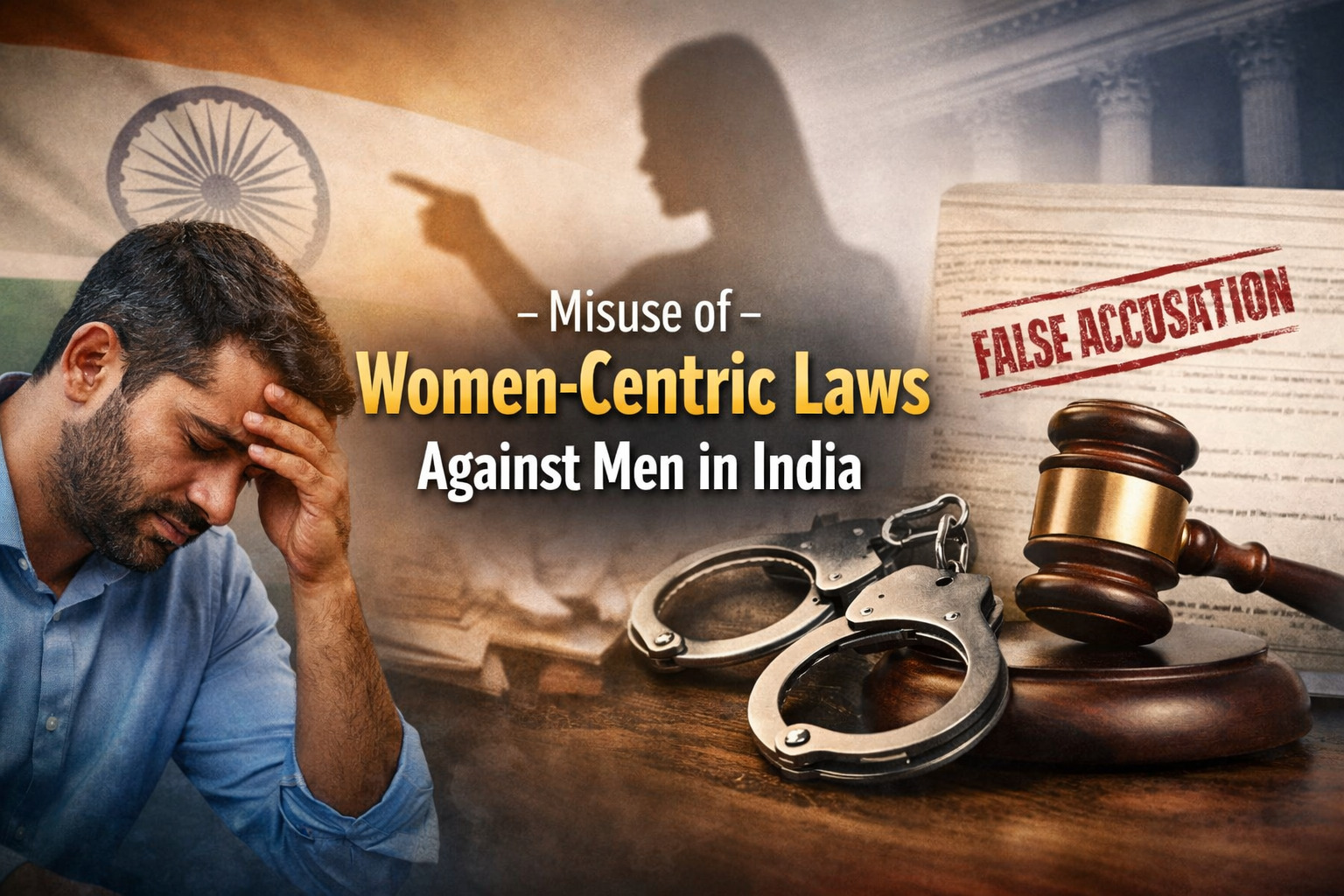
Women-centric laws in India, such as Section 498A and the Domestic Violence Act, are designed to protect women from abuse and cruelty. However, courts have observed that in some cases, these laws are misused, leading to legal challenges for innocent individuals.
The judiciary has introduced safeguards to prevent arbitrary arrests and misuse of the legal process. If someone is falsely implicated, they have legal remedies available, including approaching courts for protection and relief.
भारत में महिलाओं की सुरक्षा के लिए बनाए गए कानून जैसे 498A और घरेलू हिंसा अधिनियम बहुत महत्वपूर्ण हैं। लेकिन अदालतों ने यह भी माना है कि कुछ मामलों में इन कानूनों का गलत उपयोग किया जाता है, जिससे निर्दोष लोगों को कानूनी परेशानियों का सामना करना पड़ता है।
न्यायालयों ने ऐसे मामलों में दुरुपयोग रोकने के लिए दिशानिर्देश जारी किए हैं। यदि किसी व्यक्ति को गलत तरीके से फंसाया गया है, तो उसके पास कोर्ट के माध्यम से राहत पाने के कानूनी विकल्प उपलब्ध होते हैं।
Indian laws such as Section 498A of the Indian Penal Code, the Protection of Women from Domestic Violence Act, 2005, and the Dowry Prohibition Act were enacted to safeguard women from cruelty and abuse. These laws play a vital role in protecting genuine victims. However, over the years, Indian courts have repeatedly acknowledged that in certain cases, these women-centric laws are misused, resulting in legal harassment of innocent men and their families. This article examines the judicial view on such misuse and explains the legal remedies available for men under Indian law.
The Supreme Court of India and various High Courts have, in multiple judgments, expressed concern over the growing tendency to invoke matrimonial and women-centric laws as tools of pressure rather than protection. Courts have observed that mechanical registration of cases, indiscriminate naming of family members, and absence of preliminary scrutiny often result in prolonged legal battles for individuals who may ultimately be found innocent. Recognising this reality, the judiciary has issued guidelines to prevent arbitrary arrests and to ensure that the criminal justice system is not misused for settling personal scores. These judicial safeguards aim to strike a balance between protecting genuine victims and preventing abuse of the legal process.
In many cases today, complaints are not limited to the husband alone. It is frequently seen that the wife and her family also name the husband’s relatives such as brother, sister, mama, chacha, and other extended family members, even when they are living separately or have minimal involvement in the matrimonial relationship. Such broad allegations often result in unnecessary legal proceedings against multiple individuals, including elderly relatives and those residing in different cities. Courts have repeatedly noted that indiscriminate implication of extended family members, without specific allegations or evidence, amounts to misuse of the legal process.
A concerning reality emerging in recent years is that matrimonial litigation is sometimes used as a means of financial pressure rather than dispute resolution. Courts have taken note of instances where marital relationships break down within a very short span, followed by immediate criminal and civil proceedings seeking substantial monetary settlements. In certain cases, allegations are raised primarily to negotiate large amounts under the guise of maintenance or alimony, placing immense financial and psychological burden on the husband and his family. The judiciary has cautioned that marriage-related laws must not be converted into tools for unjust enrichment or repeated harassment, as such practices erode the sanctity of marriage and undermine the credibility of genuine claims.
Women-centric laws were introduced to address systemic social issues and provide quick legal relief to women facing domestic violence, dowry harassment, and cruelty within marriage. Provisions such as Section 498A IPC and the Domestic Violence Act are intended to act as protective shields, ensuring safety, dignity, and justice. Courts have consistently emphasized that these laws must be used responsibly and only in genuine cases, as misuse undermines both justice and the credibility of legal protection.
The Supreme Court of India and various High Courts have taken judicial notice of the misuse of matrimonial laws. In landmark judgments, the courts have cautioned against automatic arrests and mechanical proceedings, stressing the need for careful investigation. Judicial guidelines have been issued to prevent unnecessary arrests and to ensure that innocent individuals are not subjected to legal harassment under the guise of protective legislation.
False or exaggerated complaints can have serious consequences for men, including loss of reputation, mental stress, disruption of professional life, and prolonged legal battles. In many cases, elderly parents and relatives are also dragged into litigation, causing undue hardship. Courts have recognized that such misuse not only affects individuals but also burdens the justice system.
Indian courts have repeatedly clarified that protecting women’s rights and preventing misuse of law are not contradictory goals. The objective of the judiciary is to ensure that genuine victims receive timely justice while safeguarding innocent individuals from abuse of legal provisions. Balanced application of law strengthens public trust in the justice system and upholds the constitutional principle of equality before law.
Misuse of women-centric laws against men is a judicially acknowledged concern in India. While these laws remain essential for protecting women, courts have introduced safeguards to prevent their misuse. Men facing false matrimonial or criminal allegations should seek timely legal advice to protect their rights and navigate the legal process effectively.
Indian courts, including the Supreme Court, have acknowledged that certain women-centric laws such as Section 498A IPC and the Domestic Violence Act have been misused in some cases, leading to harassment of innocent men and their families.
The Supreme Court has observed that misuse of Section 498A IPC can result in legal harassment and has issued guidelines to prevent automatic arrests, emphasizing careful investigation before taking coercive action.
Yes. Men can seek anticipatory bail, FIR quashing under Section 482 CrPC, and protection against arbitrary arrest. Courts now actively safeguard against misuse of matrimonial laws.
False or exaggerated domestic violence complaints can be challenged through proper legal defense, evidence-based arguments, and judicial scrutiny during trial or appeal.
No. Addressing misuse of law does not dilute women’s rights. It supports balanced justice by ensuring laws serve genuine victims without becoming tools of oppression.
Immediate legal consultation is advisable upon receiving a complaint, notice, or FIR to ensure timely protection of rights and proper legal strategy.
Adv. Ravi Shankar Dwivedi
🌐 www.thelawgicals.co.in
📧 ravidwivedi@thelawgicals.co.in
📞 9084311136